

What Are Retinal Tears and Detachments?
During the natural ageing process, the vitreous gel inside the eye gradually becomes more liquid and can separate from the surface of the retina. Sometimes, the vitreous remains strongly attached to areas of the retina and may pull on the retina as it separates, causing a retinal tear.
If fluid passes through the tear and collects underneath the retina, it can cause a retinal detachment.
A retinal detachment is a serious eye condition that requires urgent assessment and treatment to reduce the risk of permanent vision loss.

 A large retinal tear
 A retinal detachment involving the macula may permanently affect central vision.
Causes of Retinal Tears and Detachments
Symptoms of Retinal Tears and Detachment
Risk Factors for Retinal Tears and Detachments
Myopia (short-sightedness), particularly high myopia, and increasing age are important risk factors for retinal tears and detachments.
In some people, inherent areas of weakness in the retina, such as “lattice degeneration”, may predispose to retinal tears.
Other risk factors include previous eye surgery and eye trauma. Individuals who have had a retinal tear or detachment in one eye, or who have a family history of retinal detachment, are also at increased risk.


Eye Care for Retinal Tears and Detachments
Treatment for Retinal Tears and Detachment
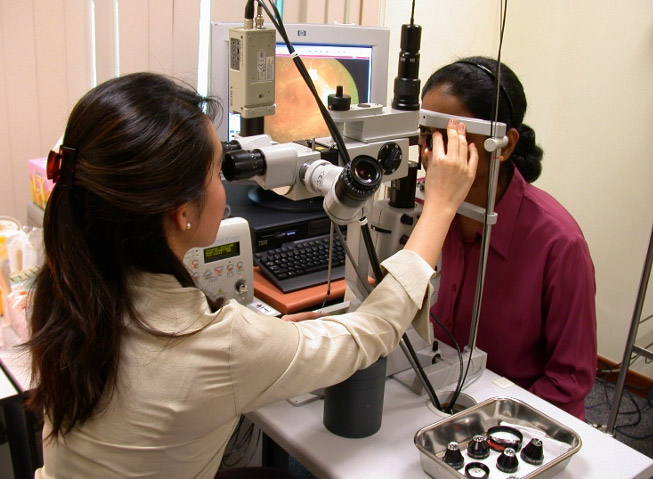
Laser treatment for retinal tears: Prompt laser treatment to seal the edges of the tear can prevent retinal detachment from developing. This is typically performed as an outpatient procedure.

Surgical retinal detachment repair: Retinal detachment generally requires surgical intervention such as scleral buckle or vitrectomy to prevent permanent vision loss. The outcome of surgery is generally more favourable when retinal detachment is treated early. Once the central part of the retina (macula) becomes detached, the potential for full visual recovery may be reduced, particularly when the detachment has been present for a longer period.
FAQs
The priority in the treatment of retinal tears is to seal the edges of the tear so that a retinal detachment does not occur. The floaters are suspended in the gel of the eye and are not treated by this wavelength of laser.
Once the retinal tear is successfully treated, the floaters are considered benign and usually require no treatment. Treatment for persistent and troubling floaters may be considered after the retina is stabilized.
LASIK reduces short-sightedness by treating the surface of the eye and does not change the structure of the vitreous gel or retina inside the eye. Since retinal tears and detachments are related to changes in the vitreous gel and retina, having had LASIK does not eliminate the risk of retinal tears or retinal detachment.
 LASIK treats the surface of the eye and the myopic changes within the eye remains even after the myopia has been removed.
Retinal detachments should ideally be repaired before the detachment spreads to involve the central part of the retina (macula). In “macula-off” retinal detachments, full visual recovery may not be possible even after successful retinal re-attachment.
Early diagnosis and treatment are therefore important, particularly before the macula becomes detached.